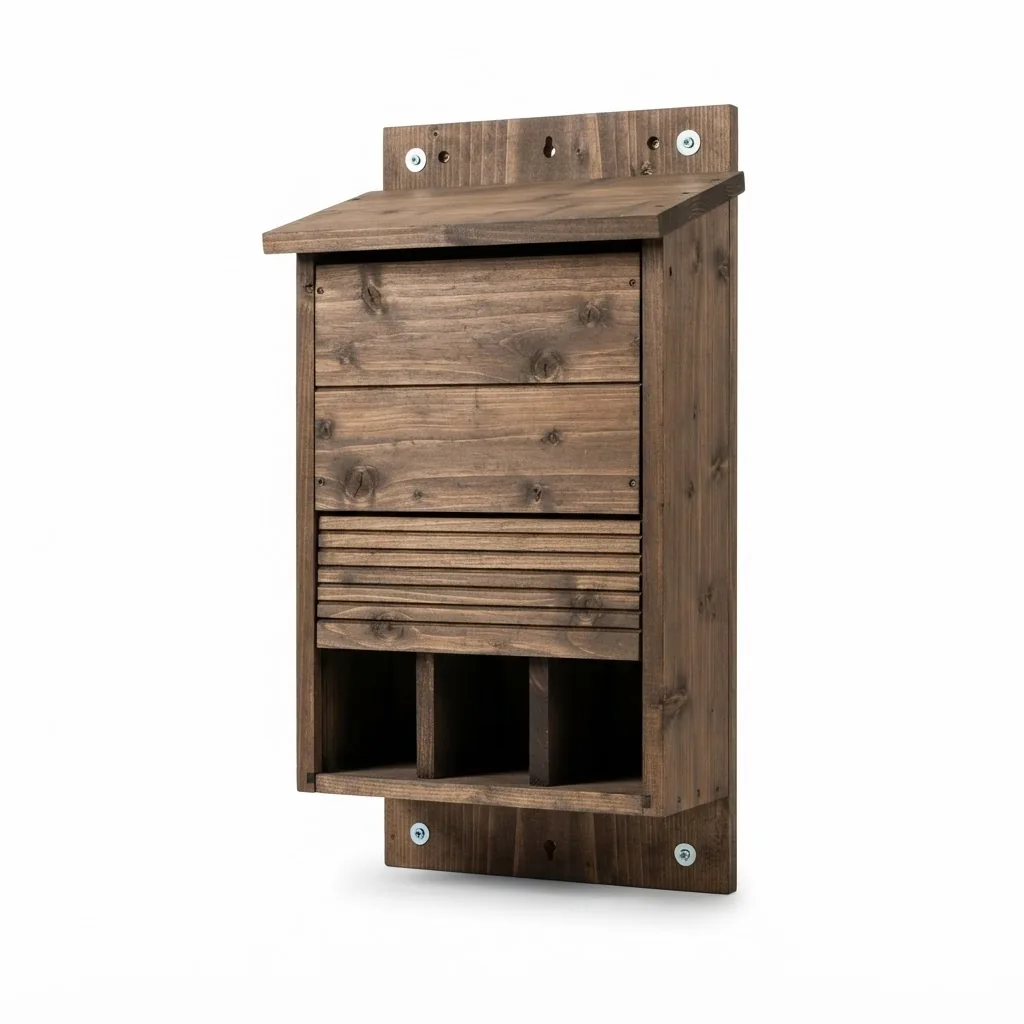
3-Chamber Maternal Bat House
$185
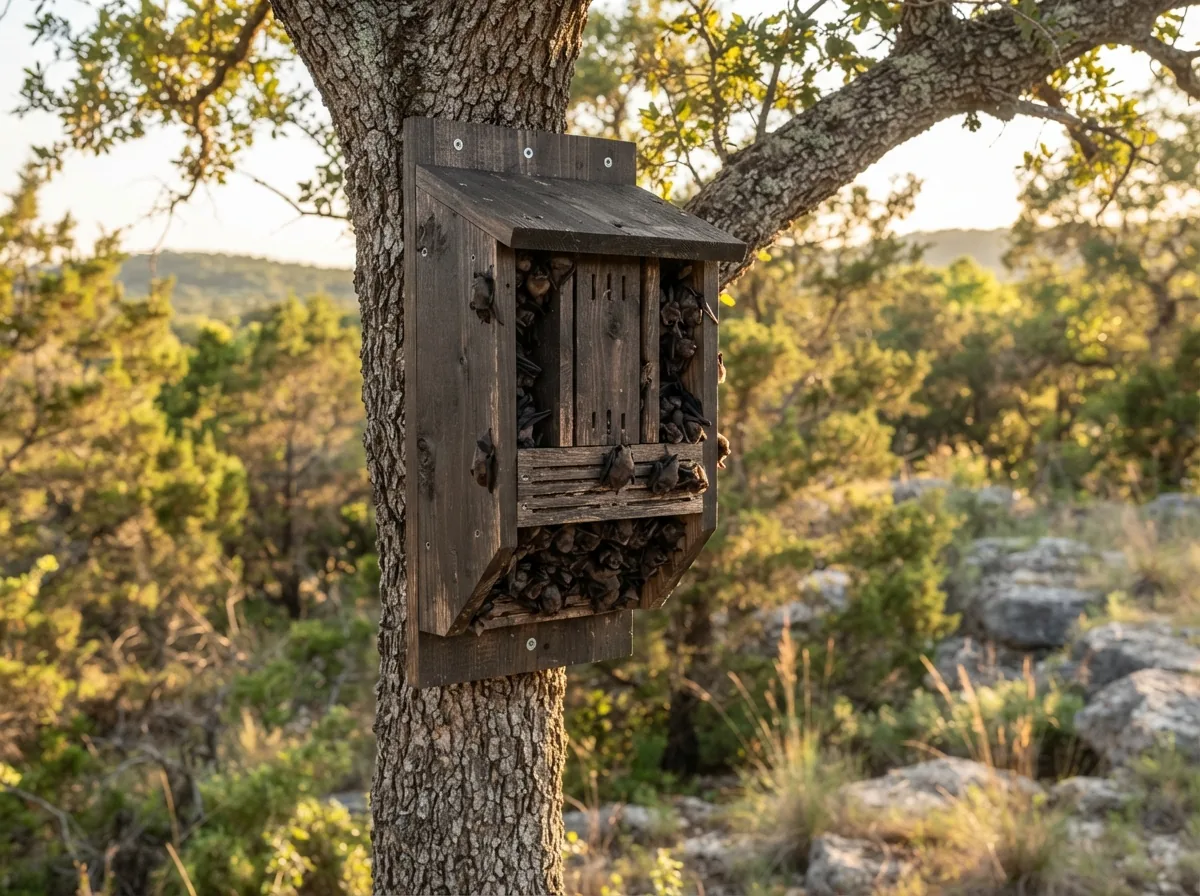
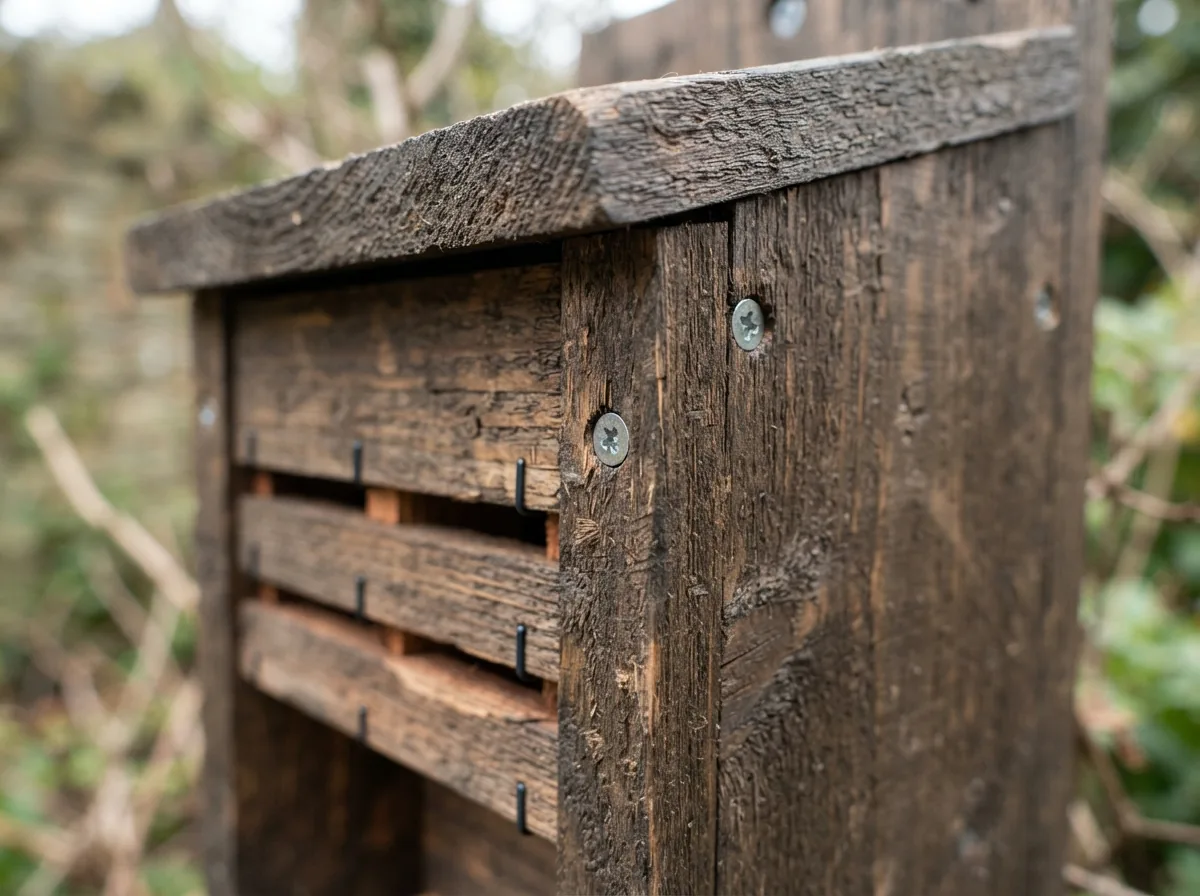
Multi-chamber ecological roosting unit housing up to 300 insect-eating bats with landing grip grooves.
- Dimensions30" H × 18" W × 5" D
- Materials100% FSC Cedar with non-toxic dark weather coating
- Warranty5-Year Craftsmanship Guarantee
Built in Texas. Turnkey field delivery and installation available statewide.
Overview
A single colony of Mexican free-tailed bats consumes an extraordinary volume of night-flying insects, including corn earworm and armyworm moths that damage crops and pasture. Texas holds the largest bat populations in the United States, and a three-chamber maternal roost is one of the highest-impact shelter practices available to a Hill Country landowner.
A single bat consumes up to 1,000 mosquitoes and crop pests hourly. Certified by Bat Conservation International with internal mesh climb ladders and precision thermal retention vents.
How this counts toward your 1-d-1 wildlife valuation
Nest boxes are the single most cost-effective way to satisfy the Providing Shelters activity. Unlike brush management or erosion work, boxes are inexpensive, immediately verifiable by an appraisal district inspector, and produce visible results in the first nesting season.
This item supports:
- Providing Shelters
- Making Census Counts
Texas requires at least three of the seven qualifying wildlife management activities. Highlighted below are the ones this product contributes to:
- Habitat Control
- Erosion Control
- Predator Control
- Providing Supplemental Supplies of Water
- Providing Supplemental Supplies of Food
- Providing Shelters
- Making Census Counts
Qualification is determined by your county Central Appraisal District, and intensity standards vary by ecoregion and property size. Nothing here is tax or legal advice. Confirm your specific activity mix with a certified wildlife biologist before filing.
Placement and density
- Mount boxes 5 to 6 feet above ground on a free-standing pole or metal T-post rather than on a tree or fence line. Poles can be fitted with a predator baffle; trees cannot.
- Face entrance holes north or east. A west-facing hole takes the full force of Texas afternoon sun and can overheat a brood.
- Space bluebird boxes at least 100 yards apart. Bluebirds are territorial and closer spacing leaves boxes unoccupied, which weakens your documentation.
- Pair boxes 15 to 25 feet apart where swallows compete with bluebirds. The pair is typically split between the two species instead of standing empty.
- A useful working density for documentation is one box per 10 to 20 acres, with a practical minimum of six boxes on a small tract.
Annual maintenance
Clean boxes out between late January and mid-February, before the first bluebird clutch. Remove old nesting material, check the predator guard is still seated, and re-tighten the mounting hardware. Photograph each box with a date stamp during the cleanout; that photo set is the evidence your appraisal district will want to see if the valuation is ever questioned.
Log the date, box number, GPS coordinate, species observed and clutch count. Nest box monitoring also generates the observation data that supports the Making Census Counts activity, which means one purchase can underpin two of your three required activities.
Full specifications
| Price | $185 |
|---|---|
| Dimensions | 30" H × 18" W × 5" D |
| Materials | 100% FSC Cedar with non-toxic dark weather coating |
| Category | Avian & Nesting |
| Qualifying activity | Supplemental Shelter & Ecological Pest Management |
| Warranty | 5-Year Craftsmanship Guarantee |
Common questions
Where should a bat house be mounted in Texas?
On a pole or building wall, 12 to 20 feet up, with at least 6 to 8 hours of direct sun daily and a clear 20 foot drop below the entrance. Never mount a bat house on a tree: the shade keeps it too cool and branches give predators access.
Which direction should it face?
South or south-east across most of Texas. Maternal colonies need internal temperatures in the 80s to mid-90s Fahrenheit, and the sun exposure is what gets a house occupied. A shaded bat house almost never attracts a colony.
How long before bats move in?
Occupancy commonly takes one to two seasons, and sometimes three. Placement matters far more than the house itself, so if a house is unoccupied after two seasons the usual fix is to relocate it into better sun rather than replace it.
How do I document bat use for my annual report?
Emergence counts at dusk are the standard method: count bats leaving the roost over a fixed period on set dates each year. Guano accumulation beneath the house is corroborating evidence. Both feed the census counts activity.
Pairs well with
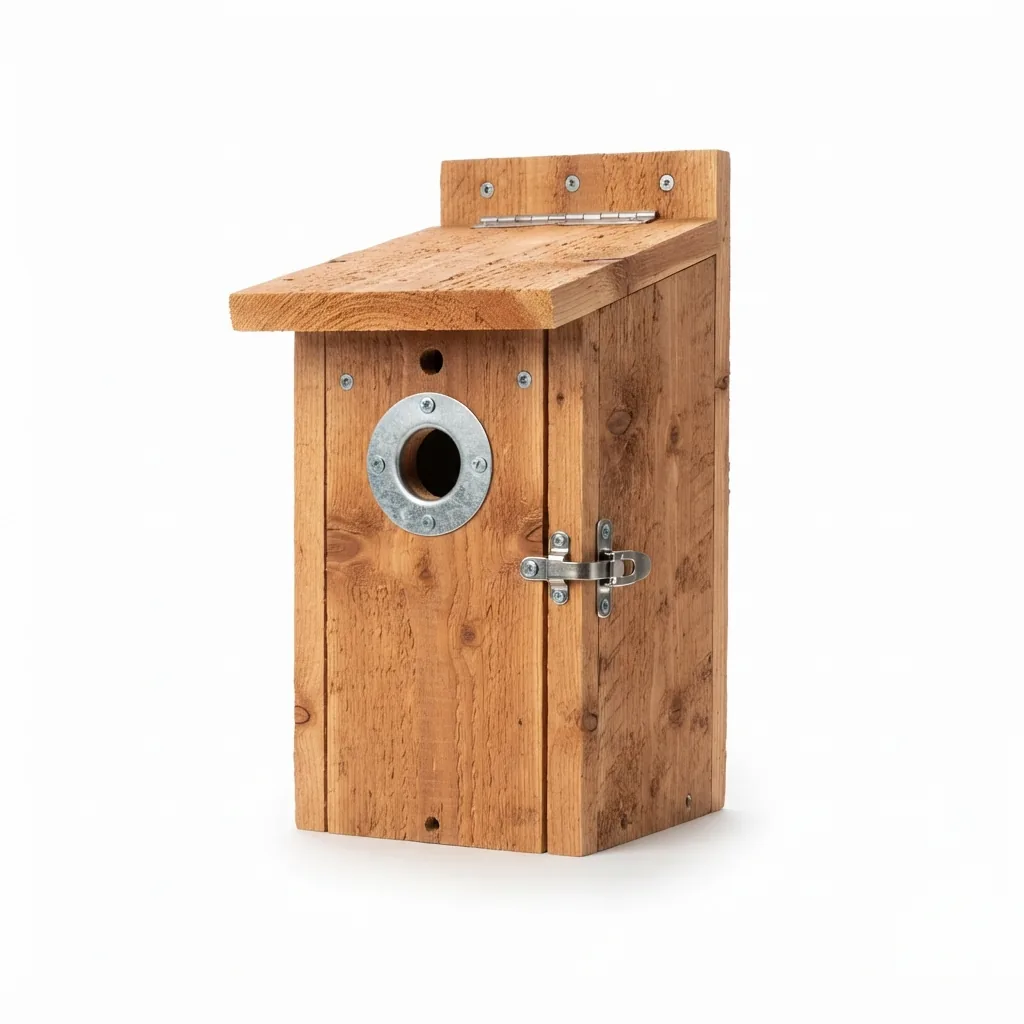
Need the plan, not just the gear?
Plateau Products supplies the equipment. Wildlife management plans, appraisal district filings and biologist consultations are handled by our sister company, Plateau Land & Wildlife Management, which has filed thousands of Texas wildlife management plans since 1997. Request an assessment and we will route you to the right team.