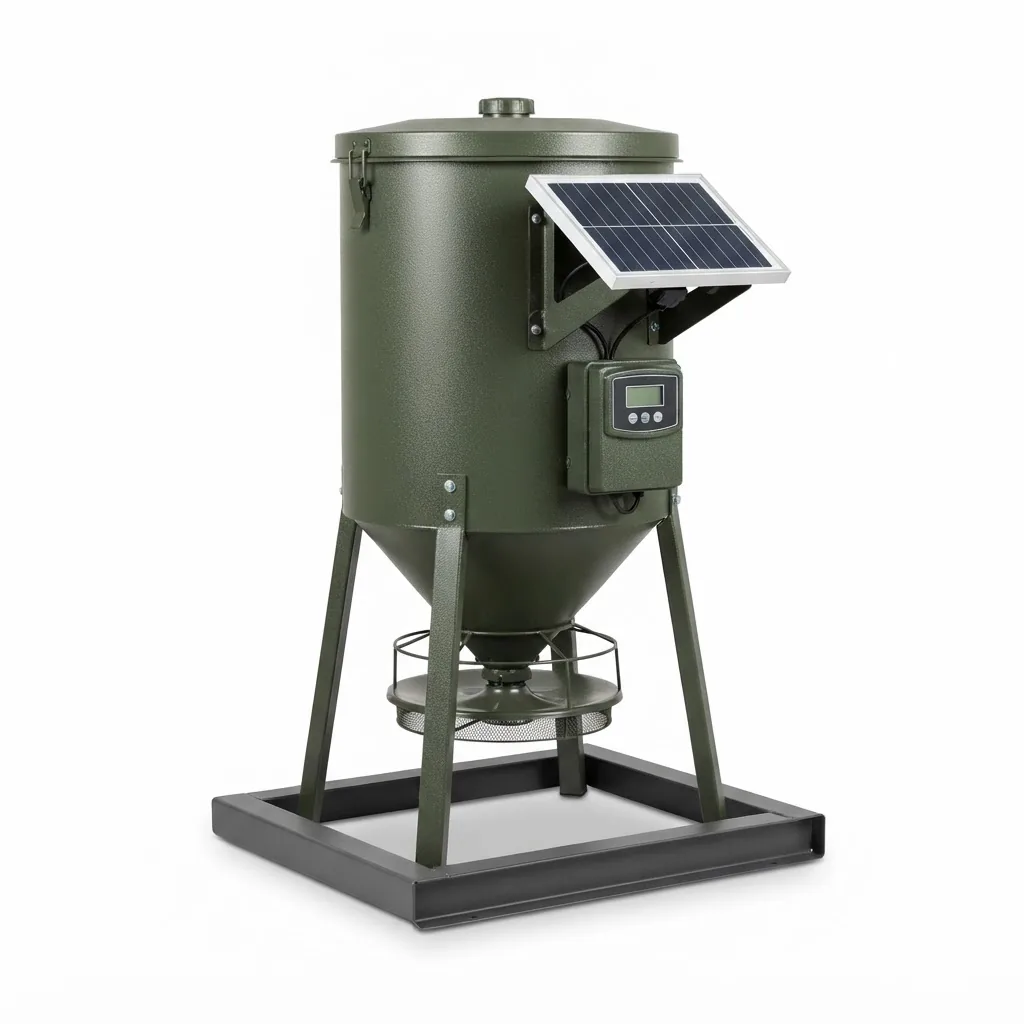
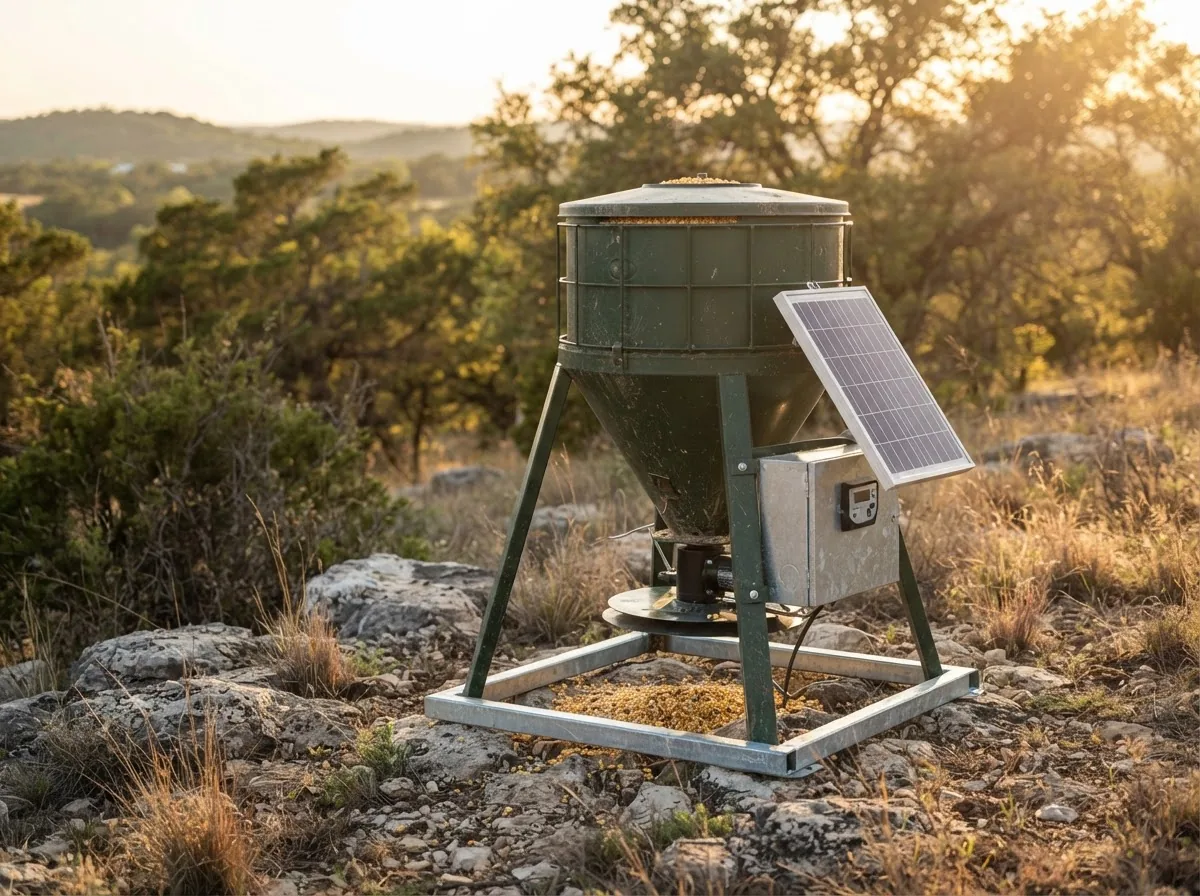
600 lb Solar Timed Broadcast Feeder
$895
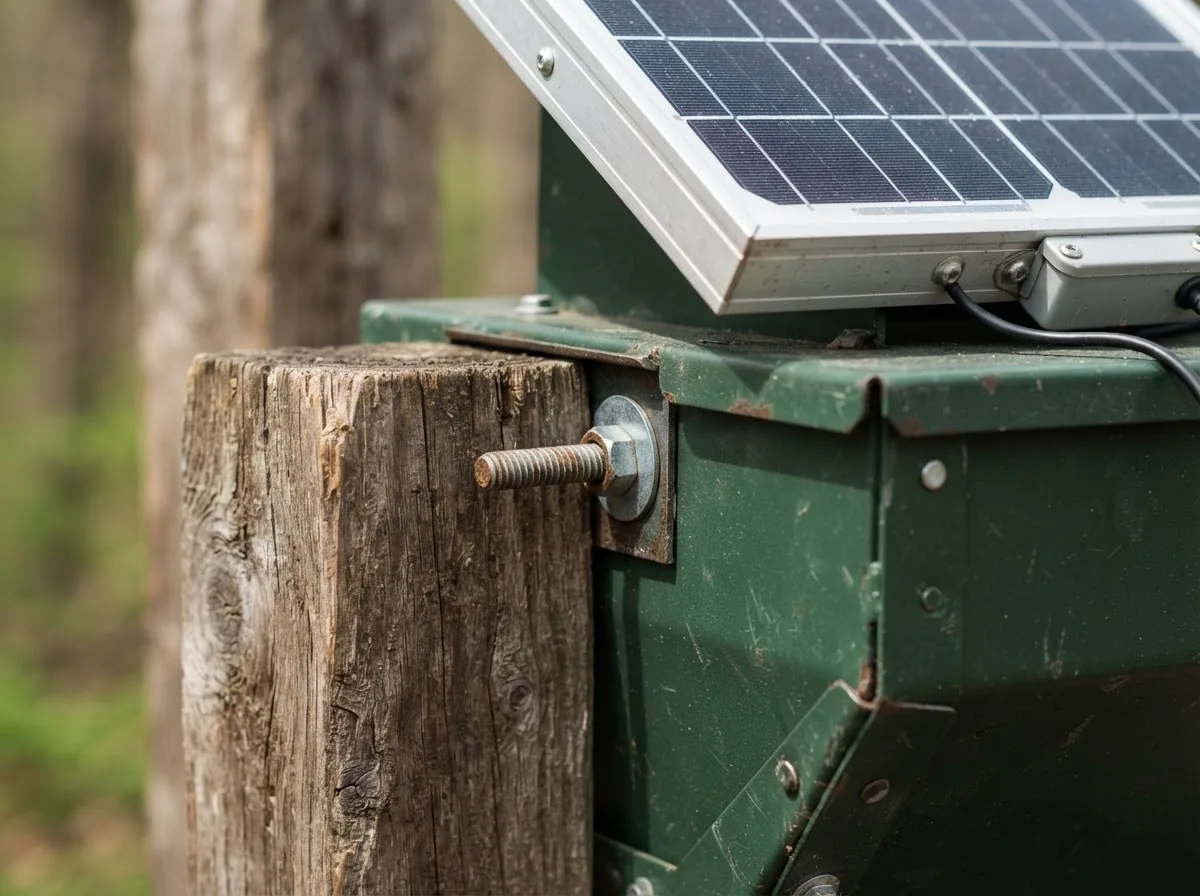
All-steel varmint-proof hopper with 12V digital programmable timer, integrated solar charger, and skid base.
- Dimensions72" Total Height, 36" Hopper Width
- Materials16-Gauge Powder-Coated Steel, Monocrystalline Solar Unit
- Warranty5-Year Structural / 2-Year Electronics Warranty
Built in Texas. Turnkey field delivery and installation available statewide.
Overview
A solar timed broadcast feeder distributes feed on a programmed schedule with no mains power and no battery swaps, which is what makes year-round supplemental feeding practical on a remote tract. The timer is also what makes the programme documentable: consistent, scheduled distribution across a full year reads as wildlife management, whereas a feeder run only in autumn reads as hunting.
Constructed to withstand harsh weather, wild hogs, and raccoons. Features heavy-duty spinner cage, programmable up to 6 feed times daily, and continuous trickle solar maintenance.
How this counts toward your 1-d-1 wildlife valuation
Supplemental feeding satisfies the Providing Supplemental Supplies of Food activity, but it carries a caveat worth understanding before you buy: appraisal districts across Texas scrutinise feeders more closely than any other activity, because a corn feeder used purely for hunting is not wildlife management. Free-choice protein and a documented year-round programme are viewed very differently from a seasonal corn spinner.
This item supports:
- Providing Supplemental Supplies of Food
Texas requires at least three of the seven qualifying wildlife management activities. Highlighted below are the ones this product contributes to:
- Habitat Control
- Erosion Control
- Predator Control
- Providing Supplemental Supplies of Water
- Providing Supplemental Supplies of Food
- Providing Shelters
- Making Census Counts
Qualification is determined by your county Central Appraisal District, and intensity standards vary by ecoregion and property size. Nothing here is tax or legal advice. Confirm your specific activity mix with a certified wildlife biologist before filing.
Placement and stocking
- One feeder per 100 to 300 acres depending on browse quality and herd density.
- Site feeders within 50 yards of escape cover, not in the middle of an open field.
- Run protein year-round rather than seasonally. Continuity is what distinguishes a management programme from a hunting setup in an appraisal district review.
- Keep feeders at least 100 yards from a property line to avoid drawing wildlife off a neighbour's land, which can create friction and complicate a plan.
- Pair supplemental feed with a documented habitat or census activity. Feeders alone are the weakest of the three activities you will claim.
Upkeep and documentation
Check batteries and solar panels quarterly, clear spinner plates of caked feed, and keep every feed receipt. The volume of feed purchased across a full year is the single strongest piece of evidence that a feeding programme is real.
Retain dated feed receipts, refill logs and game camera imagery. Feed tonnage per year, recorded consistently, is what carries this activity through review.
Full specifications
| Price | $895 |
|---|---|
| Dimensions | 72" Total Height, 36" Hopper Width |
| Materials | 16-Gauge Powder-Coated Steel, Monocrystalline Solar Unit |
| Category | Solar & Feeders |
| Qualifying activity | Supplemental Feeding (Qualifying 1-d-1 Activity) |
| Warranty | 5-Year Structural / 2-Year Electronics Warranty |
Common questions
Does a corn feeder qualify for a Texas wildlife exemption?
Supplemental food is one of the seven qualifying activities, but appraisal districts scrutinise feeders more than any other practice. A year-round programme with documented feed volumes qualifies far more reliably than seasonal corn. Many biologists advise pairing feed with a stronger second and third activity rather than leading with it.
How many feeders per acre?
One per 100 to 300 acres depending on browse quality and herd density. More feeders on a small tract can concentrate animals and increase disease transmission risk, so density should follow biological advice, not enthusiasm.
How long does the solar panel last?
The panel maintains charge indefinitely in normal Texas sun; the sealed battery is the wear item and typically needs replacement every two to three seasons. Check charge quarterly and keep the panel clear of dust and feed residue.
What records should I keep?
Dated feed receipts, refill logs and timer settings. Annual feed tonnage, recorded consistently year over year, is the evidence that carries this activity through an appraisal district review.
Pairs well with
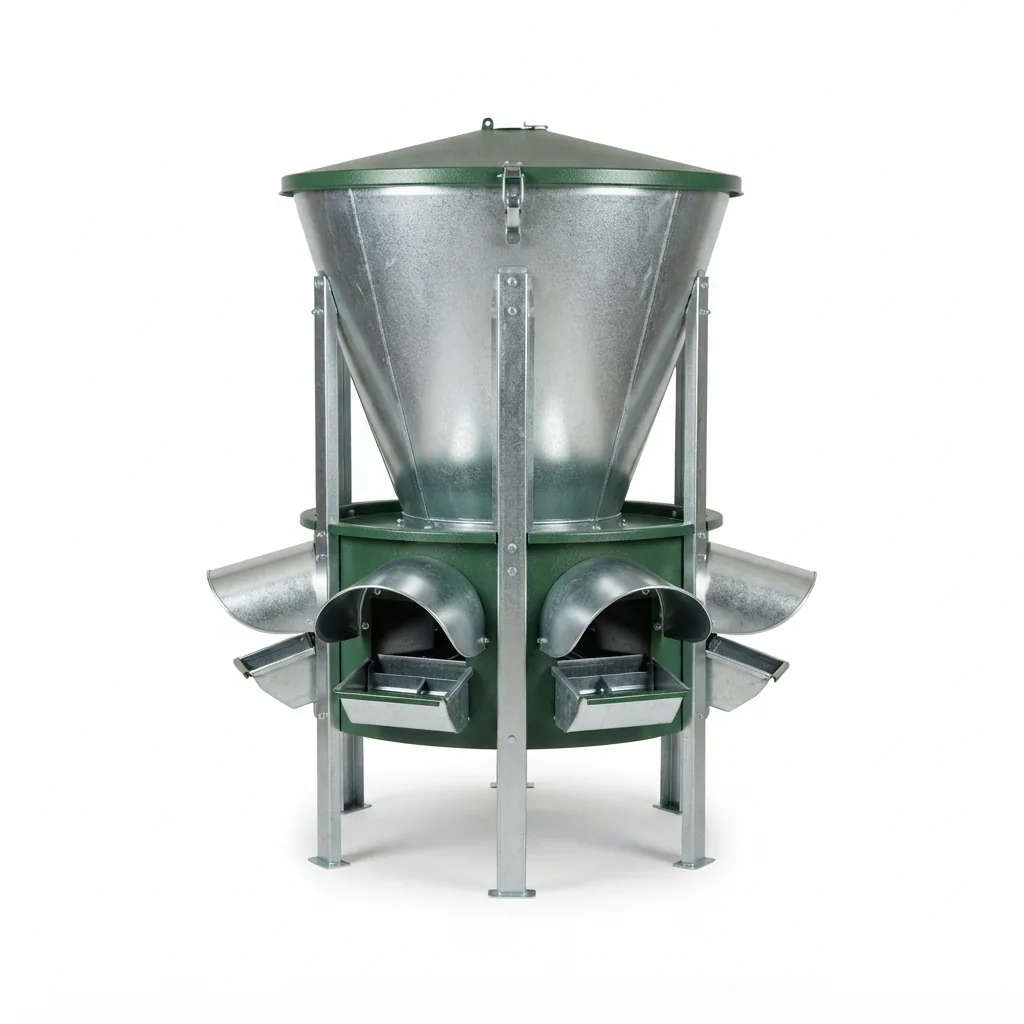
Need the plan, not just the gear?
Plateau Products supplies the equipment. Wildlife management plans, appraisal district filings and biologist consultations are handled by our sister company, Plateau Land & Wildlife Management, which has filed thousands of Texas wildlife management plans since 1997. Request an assessment and we will route you to the right team.