Wildlife Stewardship Boundary Signs
$95
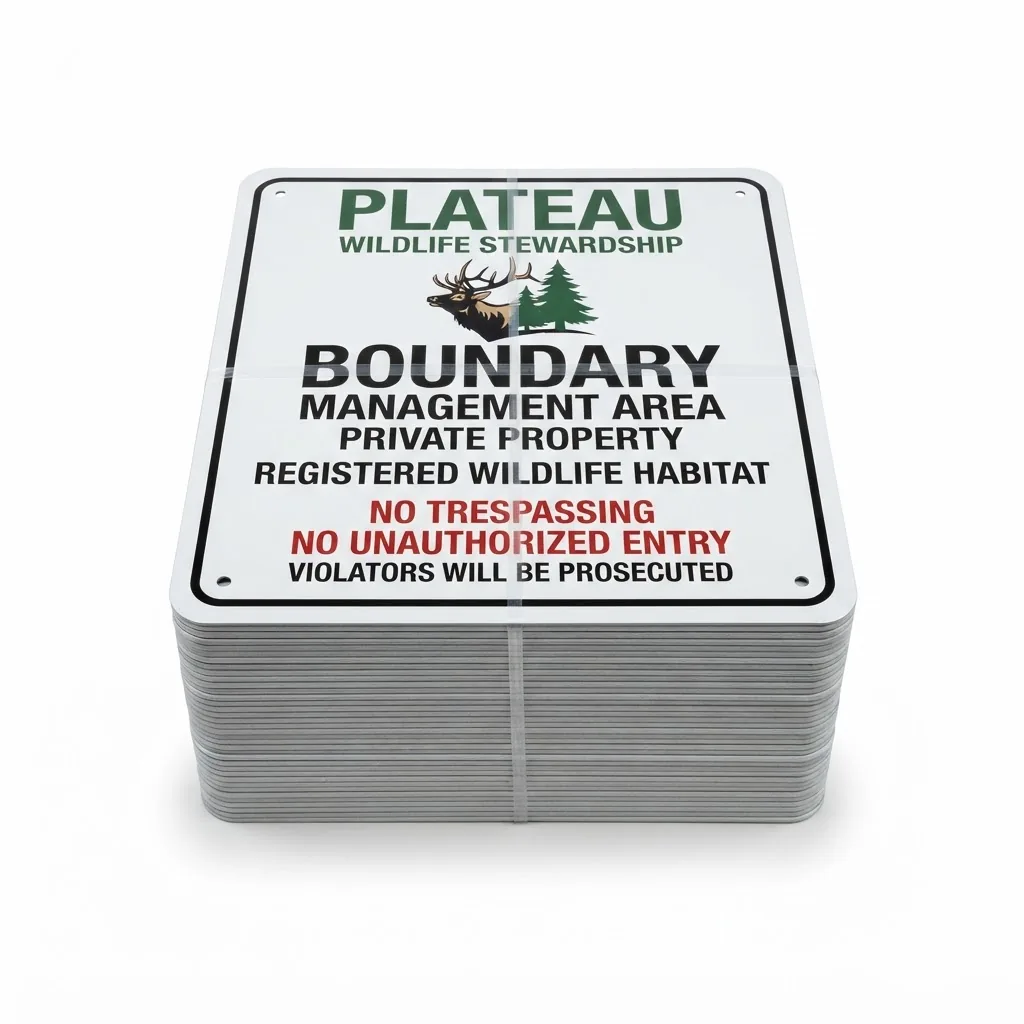
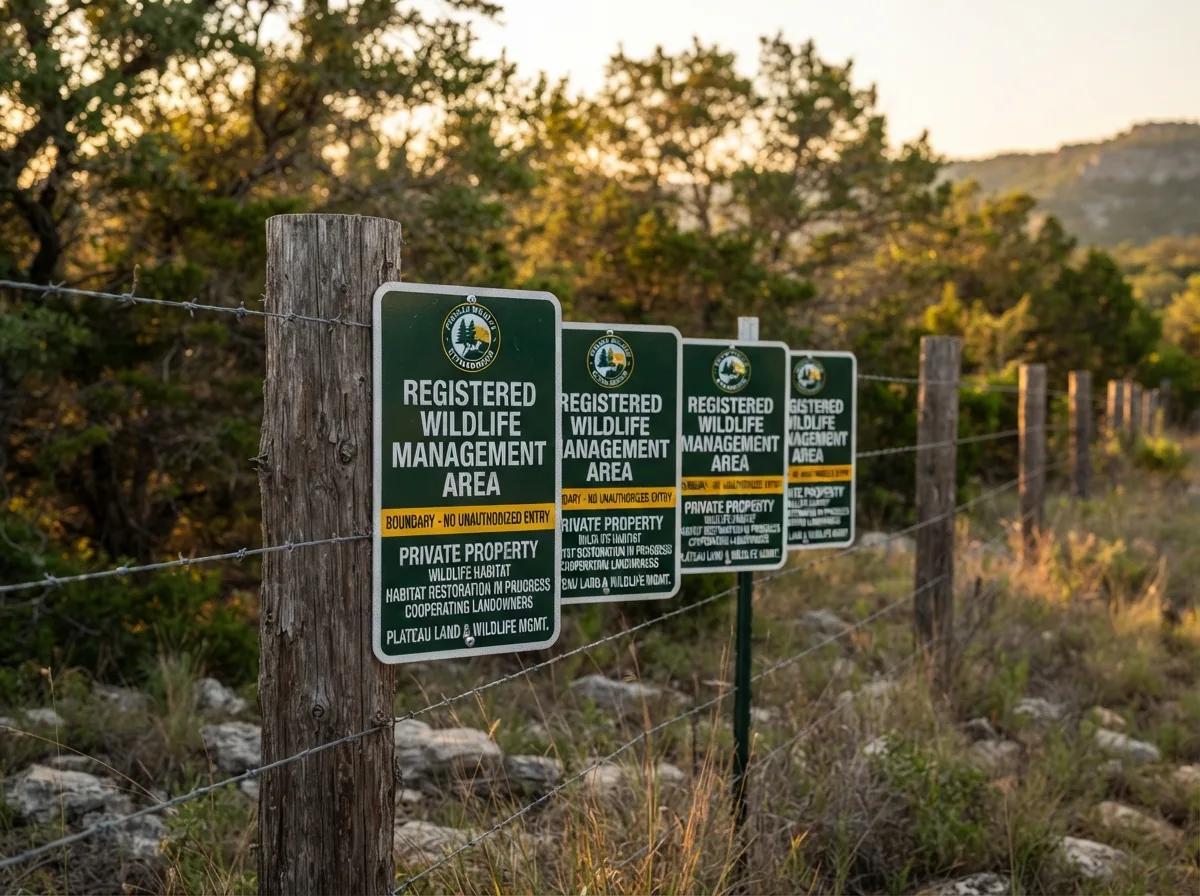
Heavy-gauge aluminum boundary markers stating registered wildlife management status and no unauthorized entry.
- Dimensions12" × 12" (0.040 Heavy Gauge Aluminum)
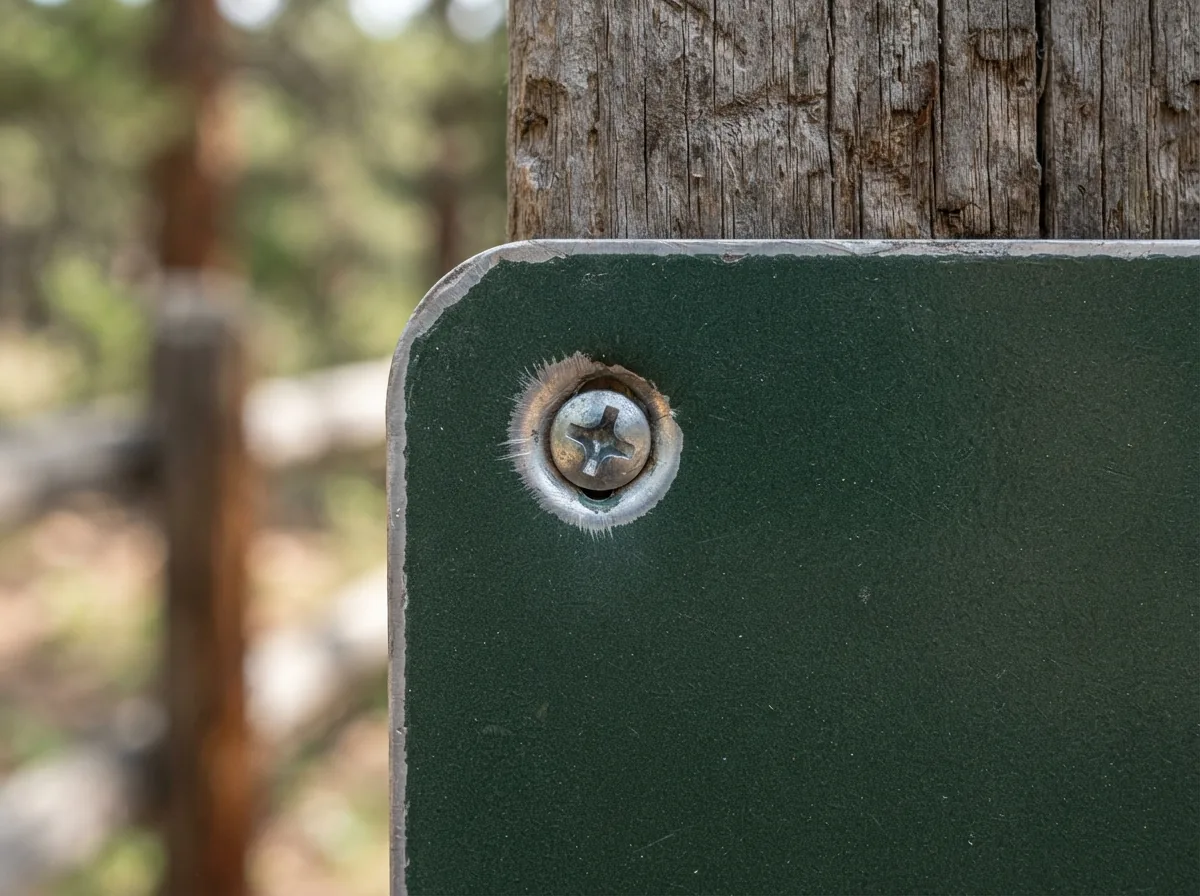
- MaterialsRust-Proof Baked Enamel Aluminum, Pre-Drilled Mounting Holes
- Warranty7-Year Outdoor Fade Resistance
Built in Texas. Turnkey field delivery and installation available statewide.
Overview
Boundary signage is a small line item that does disproportionate work. Marked boundaries reduce trespass and accidental encroachment, document that the tract is under active stewardship, and signal to neighbours and hunters that the property is managed under a wildlife plan rather than sitting idle.
Clearly demarcates active wildlife sanctuary status along perimeter fences. Highly visible reflective text prevents unintended trespass while signaling official management valuation.
How this counts toward your 1-d-1 wildlife valuation
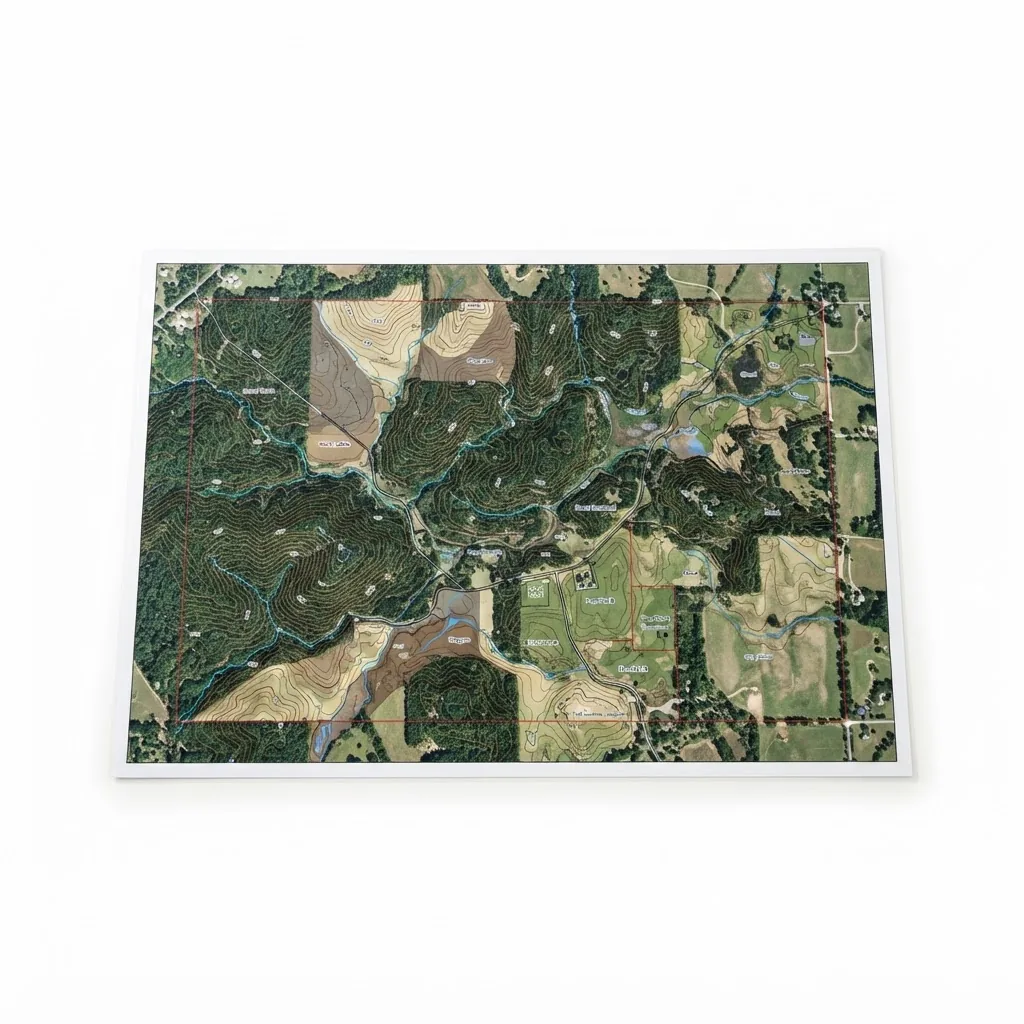
Mapping and signage are the infrastructure behind a wildlife management plan rather than an activity in their own right. A current property map is a required component of the PWD 885-W7000 plan document, and accurate mapping is what makes Habitat Control and Making Census Counts defensible instead of anecdotal.
This item supports:
- Habitat Control
Texas requires at least three of the seven qualifying wildlife management activities. Highlighted below are the ones this product contributes to:
- Habitat Control
- Erosion Control
- Predator Control
- Providing Supplemental Supplies of Water
- Providing Supplemental Supplies of Food
- Providing Shelters
- Making Census Counts
Qualification is determined by your county Central Appraisal District, and intensity standards vary by ecoregion and property size. Nothing here is tax or legal advice. Confirm your specific activity mix with a certified wildlife biologist before filing.
How mapping supports the plan
- PWD 885-W7000 requires a property map showing boundaries, habitat types and the location of each management practice. A hand-drawn sketch is accepted but a surveyed aerial map is materially harder to question.
- Mapped habitat types let you write specific, defensible habitat control targets instead of general statements of intent.
- Plotting every feeder, guzzler and nest box on one map turns a folder of receipts into a coherent management programme.
- Fixed, mapped survey routes and count stations make year-over-year census data comparable, which is what gives census counts evidential weight.
- Signed boundaries reduce trespass and document active stewardship of the tract.
Keeping the record current
Update the map whenever a practice is added or moved, and re-issue it with each annual report. An appraisal district reviewing a five-year plan wants to see the map evolve alongside the work actually performed on the ground.
File the current map with each annual report. It is the document that ties every other receipt, photograph and count sheet to a specific place on the property.
Full specifications
| Price | $95 |
|---|---|
| Dimensions | 12" × 12" (0.040 Heavy Gauge Aluminum) |
| Materials | Rust-Proof Baked Enamel Aluminum, Pre-Drilled Mounting Holes |
| Category | GIS & Signage |
| Qualifying activity | Land Stewardship & Habitat Boundary Protection |
| Warranty | 7-Year Outdoor Fade Resistance |
Common questions
Do boundary signs help with a wildlife exemption?
They are supporting evidence rather than a qualifying activity in their own right. Signage demonstrates active stewardship and reduces disturbance, but your three qualifying activities need to come from the statutory list of seven.
How far apart should signs be placed?
Common practice is every 100 to 200 yards along a boundary, and at every corner and access point. Check current Texas Parks and Wildlife and Penal Code guidance if you intend the signage to carry legal trespass notice.
Pairs well with
Need the plan, not just the gear?
Plateau Products supplies the equipment. Wildlife management plans, appraisal district filings and biologist consultations are handled by our sister company, Plateau Land & Wildlife Management, which has filed thousands of Texas wildlife management plans since 1997. Request an assessment and we will route you to the right team.